Project Overview
A technology hub unique in Europe is being created in Laufenburg on a site covering more than 40,000 m². The combination of energy, artificial intelligence and research makes the Technology Center Laufenburg a hotspot in modern energy history.
In the Rhine town of Laufenburg in the canton of Aargau, a hotspot for the energy future is taking shape. Through dynamic collaboration with universities and leading technology companies, we are creating a unique center of excellence. The various innovation sectors will generate hundreds of highly qualified jobs and provide professionals, students and research institutions with the ideal platform for pioneering developments.
The direct connection to Europe’s largest energy hub offers numerous advantages. Major energy suppliers and large-scale energy consumers are strategically positioned at this location and can operate with virtually zero transmission losses. This makes the Star of Laufenburg the ideal site for an energy storage facility of this scale.

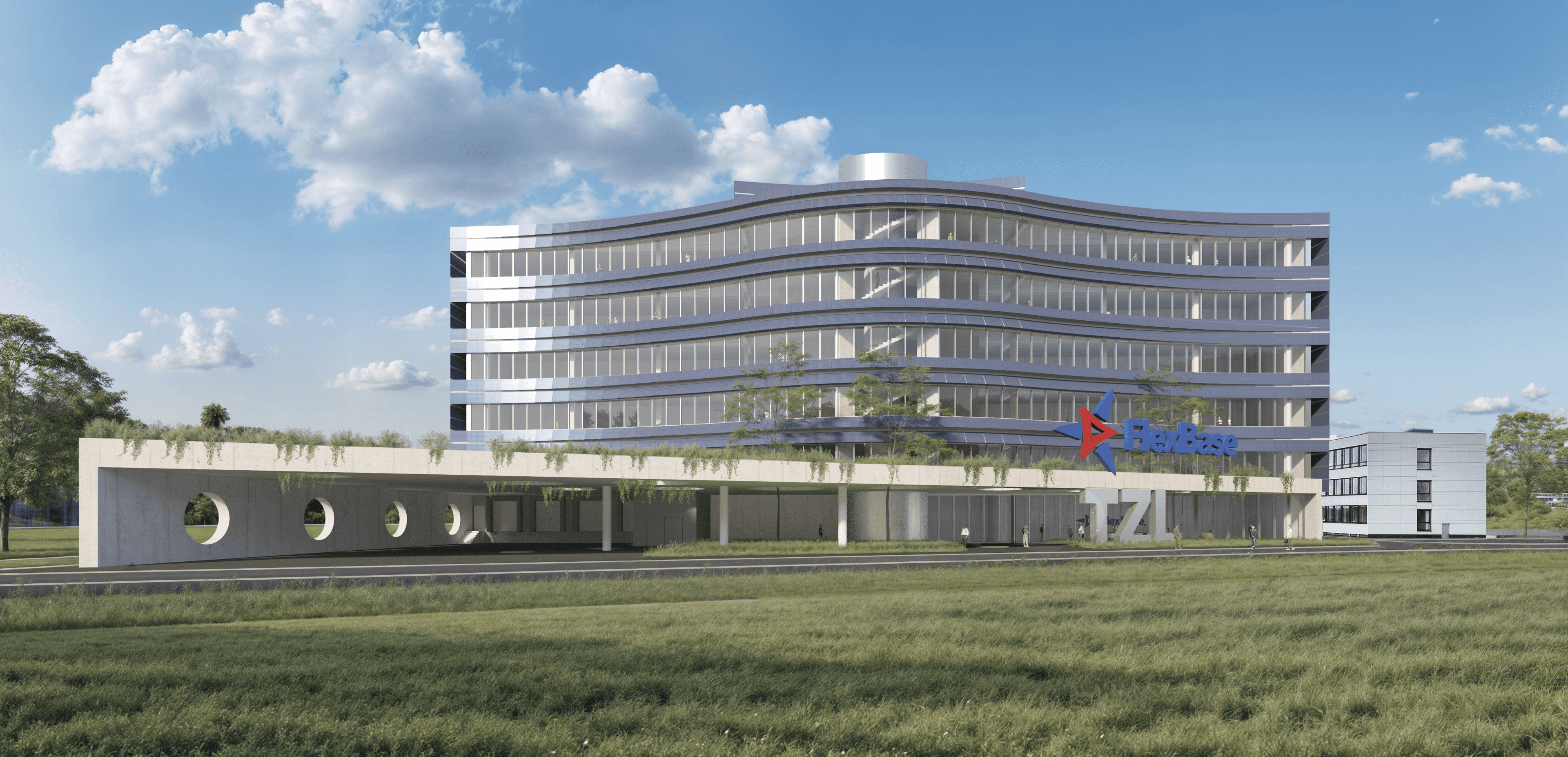
Energy system of the future
FlexBase combines renewable energy, storage technology, artificial intelligence and waste heat utilization into a holistic energy system.
Renewable energies such as solar, wind and hydropower provide the sustainable basis - the redox flow battery storage system makes this energy available at all times, stabilizes the grid and ensures security of supply even in critical situations.
Construction progress overview
The project is growing step by step. Construction, infrastructure and technical systems are being implemented and further developed in coordinated phases. Progress is structured and guided by clear milestones until completion.
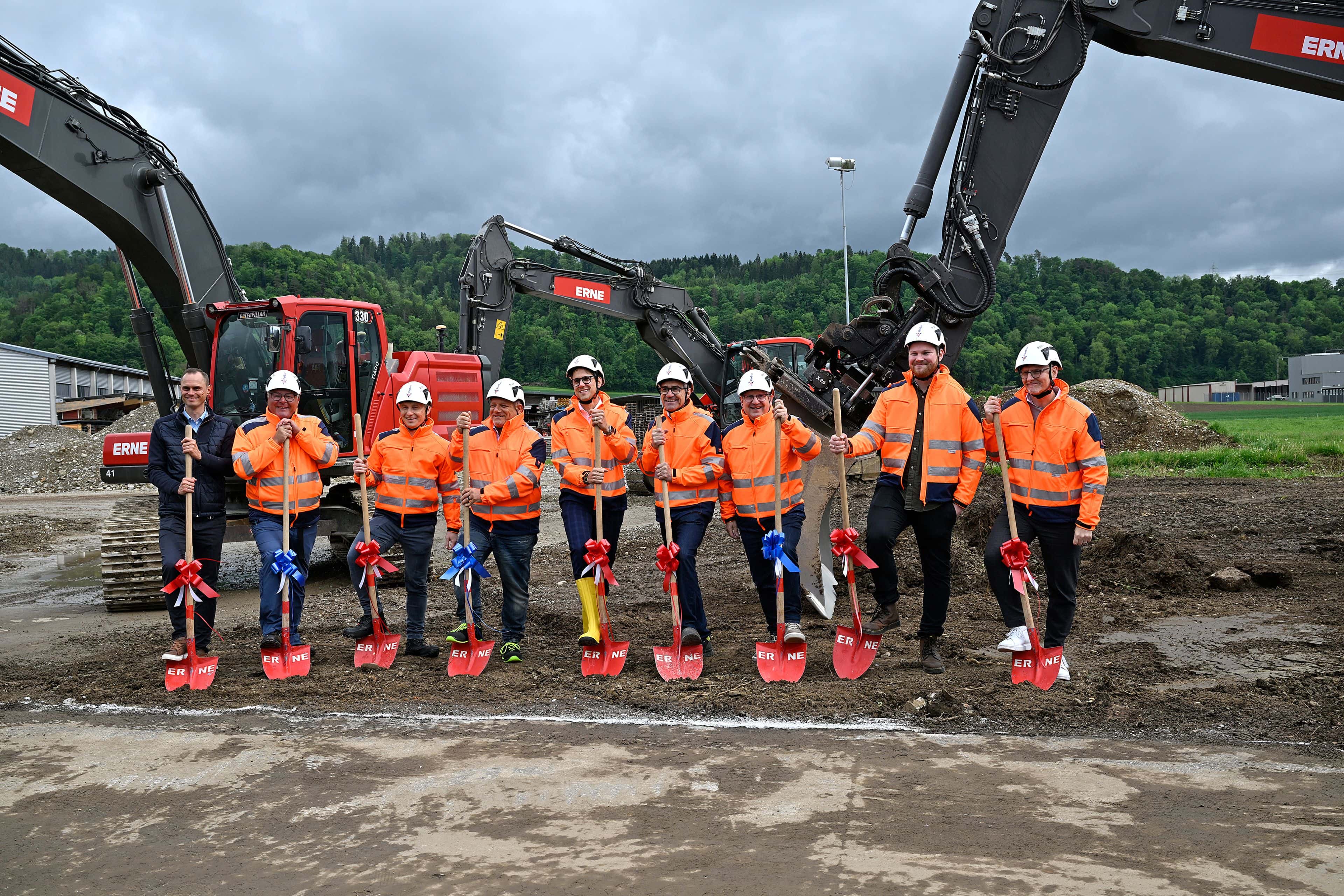
Official Groundbreaking Ceremony
On May 5, 2025, the official construction ritual - the groundbreaking ceremony - took place. The executive management of FlexBase, together with around 60 guests, including members of the press, politicians from Switzerland and Germany, specialist planners, as well as municipal and city councillors, gathered in Laufenburg to mark the occasion.

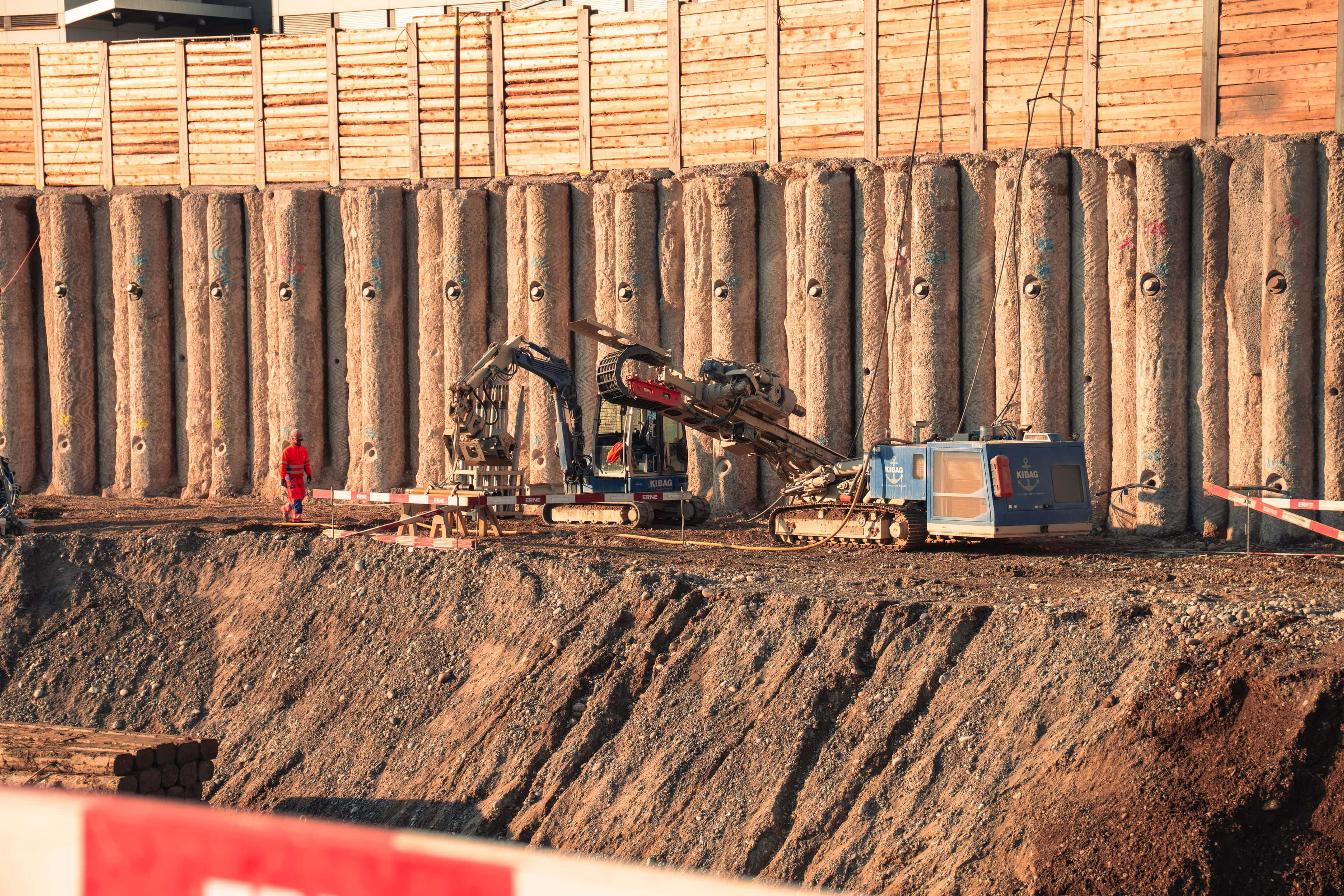
Preparations for the Top-Down Construction Method
Due to varying ground and material conditions, the excavation pit - in addition to concrete piles and steel anchors - is further secured using a so-called “top-down construction” method on the future entrance side. This construction approach minimizes the need for additional anchors that would otherwise have to pass beneath the industrial access road.
In parallel, the construction site access and exit for trucks, including a wheel-washing facility, are being put into operation.

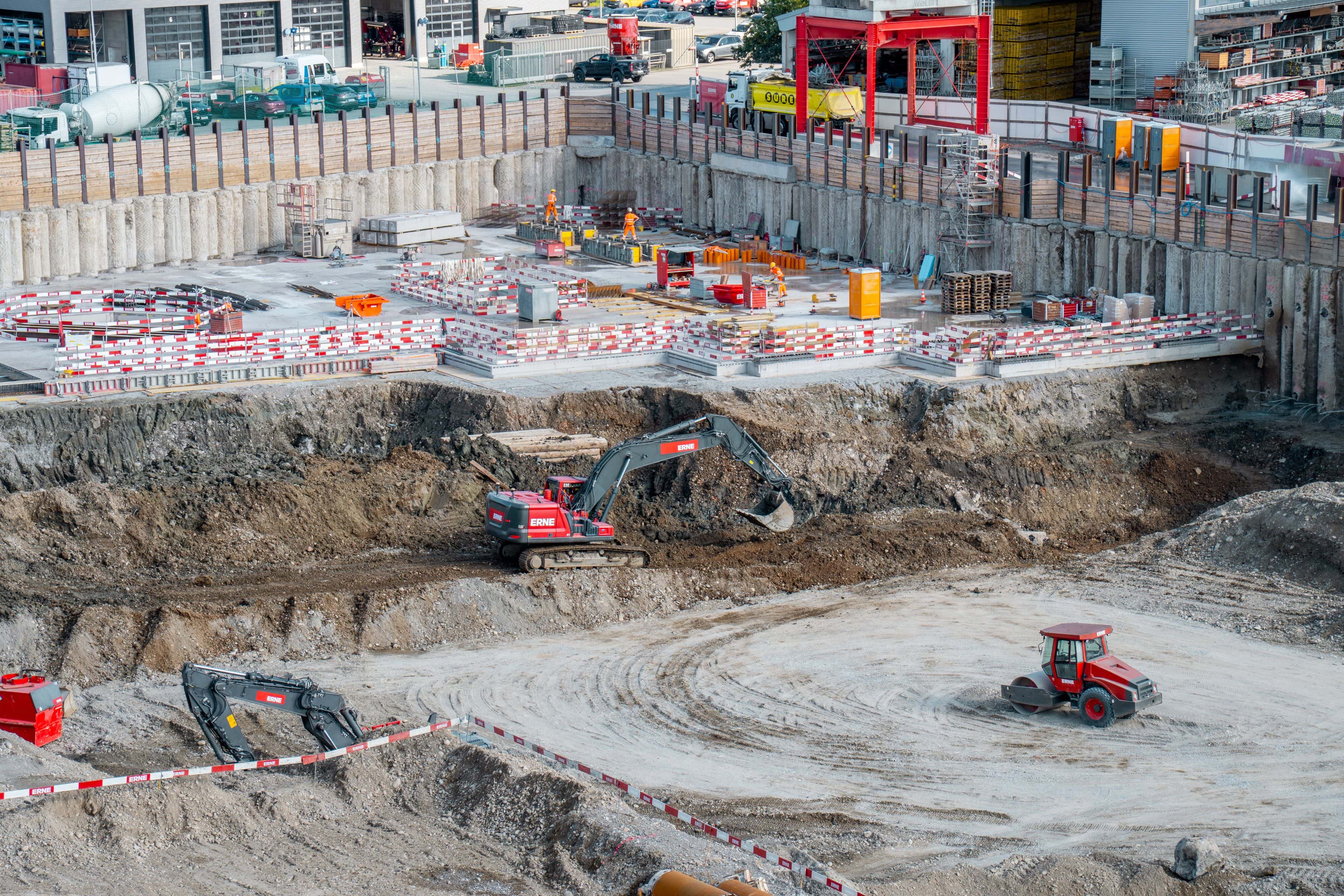
Construction Status as of the End of December 2025
As of the end of December 2025, the following interim status has been reached on the construction site:
- Bored pile works completed (100%)
- Anchor works approx. 13.4 km of 34 km (39%)
- Excavation works 240,000 m³ of 470,000 m³ (51%)

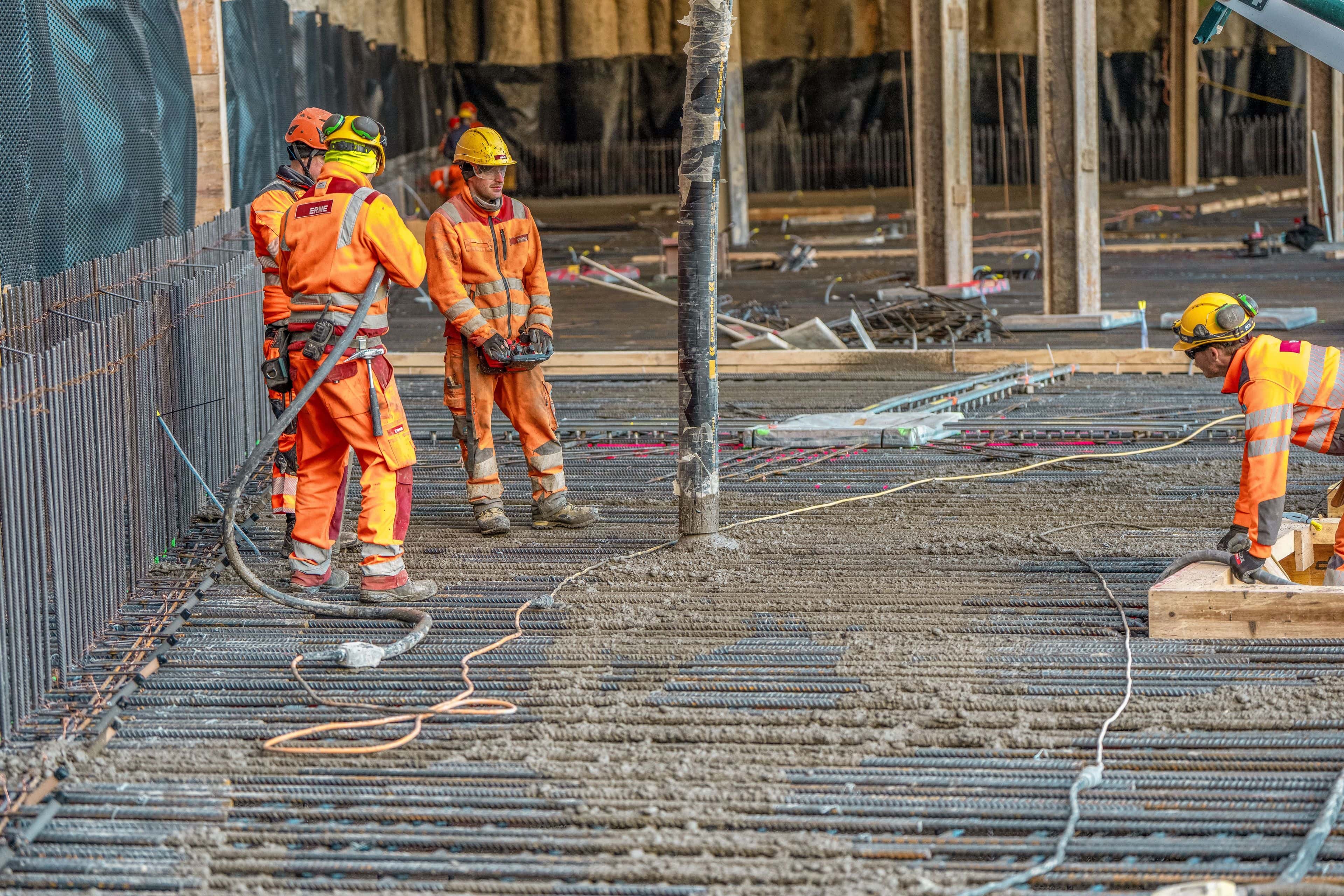
Concrete Pouring for the Floor
With the final depth of -27 meters reached and the first section of the floor slab poured, the Laufenburg Technology Center continues to take shape. The floor slab is being constructed in several phases and will form the load-bearing foundation for everything built on top of it.
A look at the current dimensions:
- Final depth reached in the first section: 27 meters
- Excavation pit: approx. 190 m long and 80 m wide
- Excavated material: approx. 375,000 of 500,000 m³ moved
- Slope stabilization: approx. 1,600 anchors in the future, up to 28 m long, each with approx. 80 tons of tensile force
- Floor: first section successfully poured

What the project entails
The project combines several key components to form an integrated infrastructure. Each component fulfills a clearly defined task - together, they form a sustainable system for energy, data processing and heat supply. From the structural basis and energy storage to artificial intelligence and intelligent heat utilization, all elements mesh seamlessly with one another.
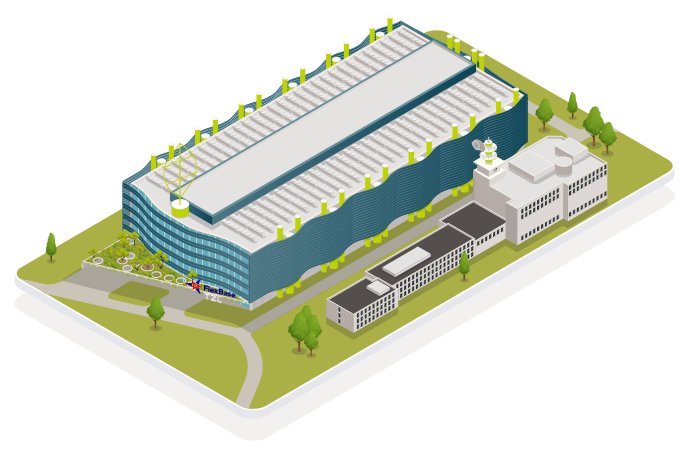
New Construction Of Technology Center
The construction of the new technology center will create a modern campus for energy and innovation in Laufenburg. Covering an area of 40,000 m², the campus will combine battery storage, an AI data center, office space and laboratories. Sustainable construction, the highest safety standards and energy-efficient infrastructure make the site a showcase project for European technology development.
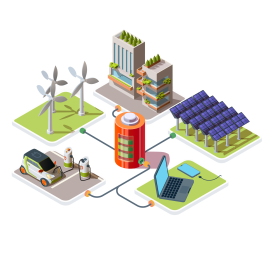
Redox Flow Battery Storage
The world's largest redox flow battery storage facility is being built at the heart of the technology center. Among other things, this innovative technology impresses with its sustainability: it is recyclable, non-flammable and non-explosive. This powerhouse will help to stabilize the energy supply in Switzerland and important parts of Europe in the long term.
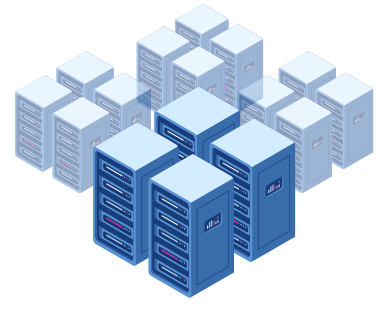
AI Data Center Of The Future
The AI data center combines cutting-edge technology with the highest security standards and guarantees a future-proof, scalable solution for hyperscalers. The FlexBase “Sovereign AI Factory” sets new standards in terms of performance, security, sustainability and future-proofing.
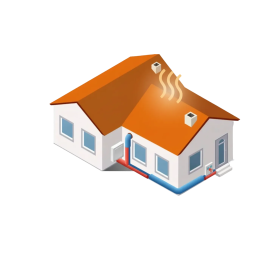
District Heating Network
The waste heat from our AI data center at the Technology Center Laufenburg (TCL) can power not only Laufenburg but an entire regional ecosystem. Our heat extends for several kilometers and can transform fossil-fuel-fired power plants into backup systems. For us, sustainability isn’t just a concept — it’s actively planned and implemented.
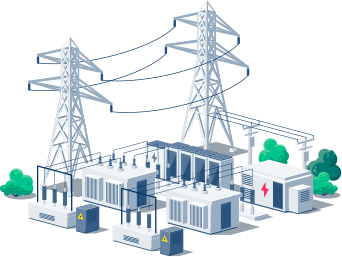
Industrial Power Grid
To supply power to the Technology Center Laufenburg, FlexBase is building an industrial grid with a connection to Switzerland's highest grid level, comparable to the electricity highway. The grid is used for the fine distribution and conversion of electrical energy to lower voltages, to which the individual battery storage units and data center consumers are connected.
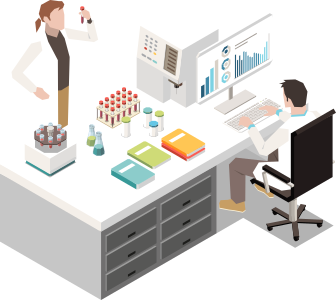
Research and development
In a world that is increasingly relying on renewable energies, efficient and sustainable battery storage solutions play a key role. Our research and development department is working on innovative technologies that are driving the energy transition forward.
Frequently asked questions
FlexBase is creating a technology site in Laufenburg that is unique in Europe, covering an area of over 40,000 m². The Technology Center Laufenburg brings together energy, artificial intelligence and research. At the heart of the project is a pioneering redox flow battery storage system that stores surplus renewable electricity and releases it when needed, stabilizing the grid and strengthening the security of supply in Switzerland and Europe. In addition, the project is creating the world's first Sovereign AI Factory in accordance with Swiss standards: an AI data center that differs from conventional data centers.
Due to safety, scalability and sustainability.
The electrolyte fluid in redox flow batteries consists of around 75% water, which makes it neither flammable nor explosive.
The storage capacity depends solely on the size of the tanks. To store more energy, larger or additional tanks can be used relatively easily and simply without having to enlarge the cells themselves. Since the electrodes are not degraded (as is the case with lithium-ion batteries, for example), redox flow batteries have a very long service life. If we look at common lithium-ion batteries, such as those found in cell phones, laptops, or electric cars, the degradation is clearly visible.
In addition, lithium-ion batteries are susceptible to overheating or fire. To limit this risk, the batteries must be heavily cooled, which consumes energy. The result is an efficiency that, on closer inspection, no longer appears as lucrative as it might at first glance.
Redox flow technology also offers clear USPs in terms of sustainability. The electrolyte fluid can be reprocessed and recycled almost 100%. Redox flow batteries are particularly well suited for applications where large amounts of energy need to be stored, such as renewable energies (solar and wind energy) or in stationary energy storage systems, as they can be used reliably over long periods of time.
FlexBase Group is an independent, autonomous group of companies financed by private equity and funds. FlexBase currently operates without any government involvement. FlexBase Holding AG is 100% Swiss-owned.
The “Star of Laufenburg” is the center and birthplace of the European interconnected power grid.
In 1958, in Laufenburg in the canton of Aargau (Fricktal region), the power grids of Germany, France, and Switzerland were interconnected for the first time at the 220-kilovolt voltage level. As a result, the Central European countries moved closer together, and with the switching installation known as the “Star of Laufenburg,” the European power grid was born. Laufenburg is the heart and the oldest node of the European electricity network.
Swissgrid’s transmission network, spanning over 6,700 kilometers, transports electrical energy at voltages of 380 and 220 kilovolts. In addition to all transmission lines, the network includes 147 substations. Switzerland is closely interconnected with its neighboring countries via 41 cross-border lines. As a power hub, it contributes to the security of Europe’s electricity supply. The Star of Laufenburg plays a central role in this - today and in the future.
The power site enables the battery storage system to be connected directly, without detours or transmission losses, making it an ideal location for storage. The existing former Swissgrid building will be revitalized and will provide more than 400 office workplaces for employees.